

Access to the Gospel in South Asia
8,100 church planters equipped as 84,000 new believers and 14,000 prayer groups emerge.
This quarter, more than 8,100 church planters in training actively engaged communities—meeting people, sharing the Gospel, forming prayer groups, and discipling new believers. Over 200 classes, each with about 40 participants, are equipping these lay leaders through a five-module, skills-based program focused on evangelism, discipleship, church formation, leadership, and multiplication. To date, their efforts have resulted in more than 84,000 new believers and over 14,000 prayer groups. Key activities this quarter included prayer walks, identifying “persons of peace,” sharing personal testimonies, and guiding prayer groups toward establishing new worshiping communities.


The training equips Church Planters to talk about Jesus, gather new disciples together for prayer, and help disciples commit to God and receive baptism. "As soon as I was saved in Christ, I started sharing the Gospel through my testimony and in other ways. Through this training, we want to introduce the living God to lost souls." Church Planters are leading prayer groups, often held in homes, that bring people together for Bible study, encouragement, prayer for one another, and to welcome those who are interested in learning more about Jesus. Pray for strength and boldness of new believers as the power of the Gospel opens doors for Church Planters to share Christ.
Access to Education and Healthcare in Uganda
Services expand across eight communities, employing 473 Ugandan leaders.
This quarter, AsOne expanded its impact across eight communities, employing 473 Ugandan leaders and reaching 53,043 lives year-to-date. Programs include 4,084 students enrolled (450 in vocational training), 12,248 patients served this quarter, and 35,788 farmers engaged in training. A key milestone was the launch of Community #8 in Pallisa, featuring a new medical center and primary school expected to serve 7,500+ patients and 350 students in its first year. The quarter also saw the launch of AsOne Labs, training 66 participants from nine communities, and received a 4.6/5 satisfaction score. Overall programs reached 92% operational self-sustainability, reflecting strong progress toward locally led impact.


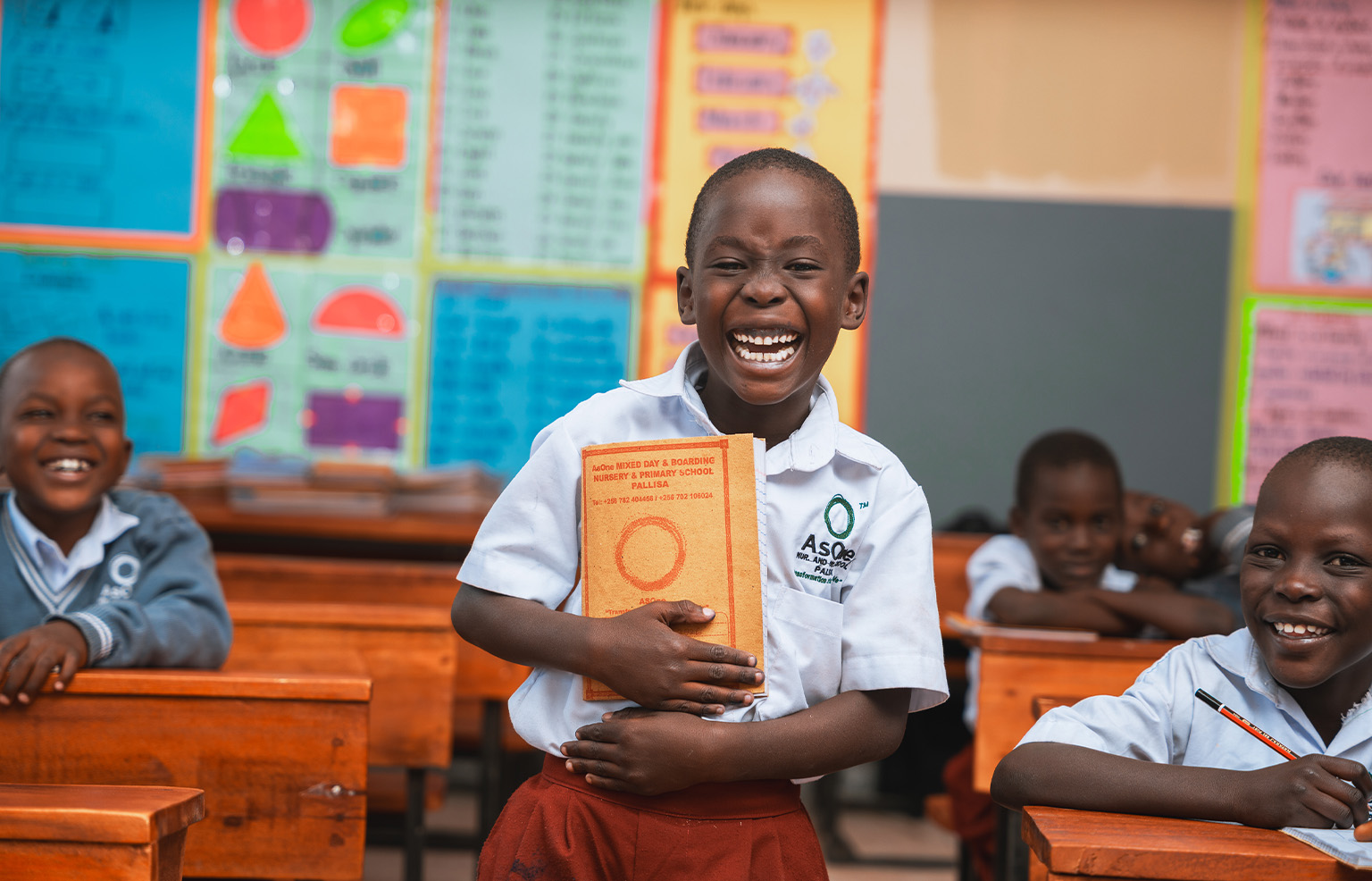
Elijah Oumo began attending AsOne Nursery and Primary School in Pallisa when it opened in February. Before joining AsOne, he struggled with reading, earned low exam scores, and only had meals like rice on special occasions. Today, he feels a strong sense of belonging and is steadily improving with the support of trained teachers, consistent meals, and Christ-centered formation that is helping him grow in his faith. After just two sets of exams, Elijah has improved by a full letter grade and is motivated to keep working hard. He now speaks with pride about AsOne’s presence in Pallisa, where access to quality, Christ-centered education is opening new opportunities.
Access to the Gospel in the Middle East & South Asia
128,383 new believers and 9,384 new churches formed.
This quarter, Biglife’s programs in the Middle East and South Asia experienced strong growth, reaching a total of 440,980 people with Gospel exposure, 16,979 Jesus Film showings, and 128,383 decisions for Christ, alongside the formation of 9,384 new groups or churches. Additionally, 27,008 Bibles (including audio) were distributed, and 3,931 medical patients were treated. Bible distribution efforts are bringing Scripture to previously unreached communities, where people are encountering stories that speak directly to their lives, leading to lasting transformation as hearts turn toward God. At the same time, new church groups in rural villages are creating spaces for worship, discipleship, and community, raising local leaders and fostering long-term spiritual and social change. In the Middle East, this impact is complemented by practical support, with food packs distributed to 3,000 families and 2,000 more in preparation, helping meet urgent needs and prevent starvation.


My name is Bir. By profession, I was a witch doctor who people paid to use black magic. Yet when I fell ill myself, I was unable to walk or talk for 2 years. Fortunately, Biglife leaders visited my home, shared the gospel, and prayed for me. After that, praise God, I was healed and am now able to walk and speak! This miracle led me to accept Jesus as my Lord and Savior, and I was baptized. Now I continue to visit the church fellowship and share my story with others.
Access to the Gospel in South Asia
500 leaders trained and 1,875 new believers are being discipled.
This quarter, Christ in Asia Ministries trained 500 iDMM coordinators across South Asia through 25 training groups, equipping them to lead disciple-making efforts. As a result, 1,875 new believers began their discipleship journey through Discovery Bible Studies (DBS), with ongoing second- and third-generation multiplication as new groups form within families and communities. New DBS groups and house churches are emerging in multiple villages, including previously unreached areas, while leadership development is empowering local leaders, women, and youth to start and multiply groups and disciple others. Next steps include expanding DBS into new villages, training more leaders, strengthening regional networks, and increasing B4M training.


Shila, a mother in rural village in South Asia, struggled to provide for her family. Through coordinator training, she developed as a local women’s leader, started a small group, and launched a vegetable business, improving her income.Through Discovery Bible Study (DBS), she chose to follow Jesus. Today, she supports her family, leads others, and shares her faith, reflecting both spiritual and economic transformation.
Access to Economic & Health Training Across Africa
1,527 Surveys and 15 savings groups launched as Burkina Faso program gains momentum.
Across seven countries, strong early-stage progress is being made through community mobilization, training, and baseline data collection. Burkina Faso and Ethiopia are building foundations with 1,527 and 447 baseline surveys completed, while Ethiopia has identified 14 of 16 target communities and is working toward 800 households despite conflict-related challenges. South Sudan and Chad are advancing implementation with 971 surveys, 109 training sessions, and 1,210 participants trained (out of 1,813), alongside practical agriculture, nutrition, and enterprise activities. Uganda and Burundi show broad engagement, reaching 1,750 households and 959 participants respectively, with 1,458 surveys in Uganda, 1,611 household visits in Burundi, and over 30 savings groups established. In D.R. Congo, more than 165 participants are engaged through a Virtual Learning Community, with a Training of Trainers planned to expand impact further. Overall, these efforts reflect meaningful traction in both program rollout and early behavior change across communities.


Natural vegetable production is growing in the FARM STEW community of Lerghó (Tenkodogo), Burkina Faso. After completing their zucchini harvest, local women transitioned to naturally growing tomatoes with support from trainer Landry Tiemtoré. They produced several crates, selling some fresh and drying others for preservation, creating a sustainable income-generating activity. This initiative reflects increasing community ownership and practical application of FARM STEW principles. We thank God for the impact in Lerghó and across Burkina Faso, and for the opportunity FARM STEW has provided to these communities.
Access to Education and Healthcare in Uganda
Three new schools launched, 598 passed exams and 15,710 patient visits.
This quarter, Musana achieved a major milestone with the launch of three new schools in Kamuli, Mayuge, and Budaka, expanding its long-term community impact. Across its education programs, 598 students passed national exams (PLE, UCE, and UACE), while 23 schools participated in the UNSA competitions hosted at Musana’s campus in Iganga. Musana’s hospital staff conducted 53 community outreaches and served 6,985 clients, alongside 15,710 patient visits across three facilities.


Musana’s 2025 Annual General Meeting, held on March 27 at Solview Hotel Iganga, brought together 250+ stakeholders, including government leaders and community representatives, to reflect on progress and align on future priorities. During the meeting, district leaders made key commitments, including pursuing tax exemptions through the President’s office, tarmacking access roads to MVHS Kamuli and Solview Kamuli, and improving infrastructure at MVHS Iganga with paved roads and solar lighting. These commitments signal growing local ownership and represent strategic investments to expand access, reduce operational barriers, and support Musana’s long-term impact.
Access to Safe Water and the Gospel in The Sahel
2,791 people attend 25 sanitation and hygiene training sessions.
This quarter in the Sahel, Neverthirst’s local partner focused on assessing and validating water access site locations for planned water infrastructure projects in 2026, with the majority of locations now confirmed. Additional efforts included forming and training water user committees, conducting 25 hygiene training sessions attended by 2,791 people, and equipping 36 pastors to deliver effective WASH services. This training covered promoting safe water use, hygiene and sanitation practices, and supporting inclusive behavior change, while also building the capacity of pastors to engage with majority faith communities.


In Neverthirst’s Sahel program, Christians are in the extreme minority in both program locations. Their local partners work very closely to build the capacity of local pastors and evangelists in WASH and in relationship building with the majority faith community. We are encouraged to see that, in this first quarter of the year, 5 new home groups have been started with 72 people attending and exploring the Bible and learning about Jesus.
Access to the Gospel in South Asia
5,032 new groups and 3,347 house churches established.
This Quarter, New Generations’ local partner conducted trainings for 30 church planting movement leaders. They also conducted two coordinator training events with 40 coordinators and 120 catalyst training events for 2,260 church planters. In 2026 so far, a total of 5,032 new discovery groups were initiated with 34,564 new disciples, 8261 new baptisms and 3,347 new house churches. Besides DMM trainings and coaching events, there were Business for Movement, Community Health Education, and Self Help Group training events as well.


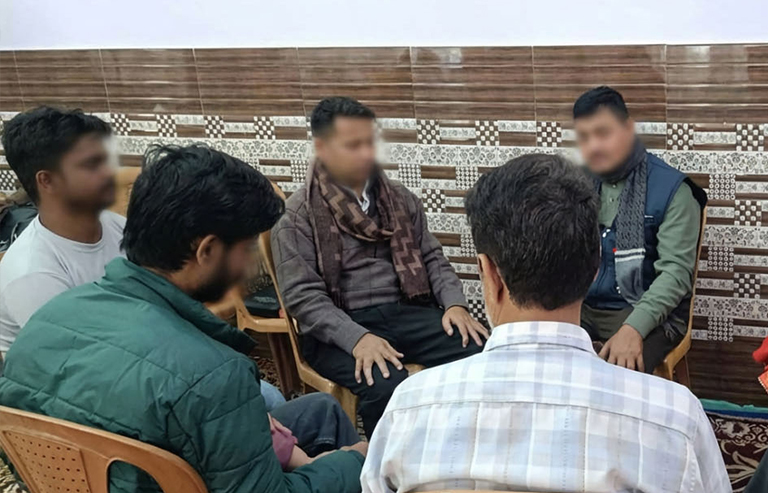
In his small town, Alok was driven by a simple question: “How many people can I reach alone?” This led him to invest in ordinary people from nearby districts, encouraging them with the message, “You don’t need to be perfect, just share what you’ve learned.” As they followed Disciple Making Movement principles, those once hesitant grew into confident leaders who began forming new groups. Despite challenges and limited resources, Alok remained faithful, and what started with one question has grown into a multiplying, self-sustaining movement of leaders raising up others.
Access to Savings and Loans Groups Across Africa
Over 65,000 families lifted toward poverty freedom across Africa.
This quarter, Plant With Purpose achieved significant scale and momentum across their global programs, reaching over 65,000 families across Africa. Farmers and communities planted over 1,984,420 trees across their regions. They reached 12,726 total farmer engagements at regenerative agriculture training, while also forming 16 new Purpose Groups (savings groups), with 606 groups actively on track to graduate by July 2026. A landmark milestone was reached in Tanzania, where they celebrated the Wona Watershed Graduation, honoring 95 groups that have partnered with Plant With Purpose for 20 years of sustained environmental and economic transformation. In Burundi and the Democratic Republic of the Congo, successful tree planting campaigns further demonstrated the broad geographic momentum driving our mission forward this quarter.


Mirindi, a 29-year-old farmer and father of two from Rwenena village in the DRC, joined Plant With Purpose in 2022, where his community engages in savings groups, loans, and sustainable agriculture training to build financial independence. Before this, he had been part of an armed group, sharing, “I was enrolled in an armed group… which led me into a spiral of violence, insecurity, and suffering… I had neither peace nor a future.” Through support from the program and local leaders promoting peace and cohesion, he chose to leave and return home. Today, Mirindi farms over one and a half hectares of red onions, has sold his first harvest, and says, “I am proud to say that I dedicate myself to agriculture, a generous activity that feeds my family and contributes to the stability of my village.”
Access to the Gospel in South & Southeast Asia
46,836 church planters trained and 689 churches planted already.
This quarter, Project Twelve trained 2,576 church planting trainers (“Pauls”) and 46,836 church planters(“Timothys”) across South and Southeast Asia. Although the programs are still early in their two-year cycle and some attrition is expected, meaningful progress is already evident. Since launching, these efforts have resulted in 689 new churches already planted. Early indicators point to strong momentum and impact.


Dhanaraj, an auto-rickshaw driver in South Asia, received a serious diagnosis and was not expected to recover. A Project Twelve trained church planter visited him, shared the Gospel, and Dhanaraj chose to believe in Jesus. His faith quickly led him to share the Gospel with his passengers, including Rajagopalan, who had been badly injured in an accident and faced multiple surgeries. Through ongoing care and connection to a church community, Rajagopalan also came to faith and eventually recovered, walking again without needing all the surgeries. What began with one man’s encounter with the Gospel grew into a ripple effect, transforming multiple lives and communities.
Access to savings and loans in Uganda and South Sudan
276 new savings groups started with 6,796 new members.
This quarter, Seed Effect started 276 new savings groups, reaching 6,796 new members and continuing to serve existing members across nine branches in northern Uganda and South Sudan, bringing their total served since 2017 to 130,246 members in 4,905 savings groups. In January, program staff completed a three-day database training in Adjumani for all nine branches, coinciding with major upgrades to Seed Effect’s database and field surveys that now allow for cycle-level data analysis of key trainings. In March, Seed Effect introduced an updated, shorter three-day training design for the "Farming God’s Way" Conservation Agriculture curriculum, which includes specific gender and demographic targets (70% female, 50% host/refugee).


Before Seed Effect came to Moyo, Joyce Aziku struggled to provide for her family through farming, earning just enough for school fees and food but little else. When she joined a savings group in 2017, she began setting money aside and took a loan to pay school fees and start a brick making business. Over time, she expanded her savings, built her home, and launched a small food business, which now allows her to save consistently and support her family more sustainably.
Access to Safe Water and the Gospel in CAR
16,621 People gain access to safe water and sanitation across three countries.
This quarter, Water for Good’s Vision of a Healthy Village model delivered safe water, sanitation, and hygiene by working alongside families to build healthier, more dignified communities. In 2026 so far, 16,621 people across CAR, Ethiopia, and Tanzania have gained access to improved sanitation and hygiene, including 263 households in CAR, 1,917 in Ethiopia, and 316 in Tanzania. While Q1 infrastructure progress was delayed, momentum continues, with 44 water points under construction in CAR to serve over 21,000 people and 11 already completed in Ethiopia, reaching 2,653 people. Ongoing maintenance efforts are sustaining impact, supporting over 55,000 people in CAR, nearly 96,000 across 390 water points in Ethiopia, and 7,750 people through 31 water points in Tanzania. With safe water driving better health, education, and economic opportunity, continued support is essential to complete infrastructure and expand access to thousands more in 2026.


Water for Good continued transforming lives by restoring one of women’s most valuable resources: Time through access to safe water. In Dada village, Ethiopia, 58-year-old Kandi Wabe once spent up to an hour each day collecting unsafe water, while illness in her household limited her ability to do more than survive. Through the Vision of a Healthy Village approach, she received hygiene and sanitation training, and a nearby well now serves 48 households just five minutes from her home. With improved health and more time, Kandi has begun pursuing income-generating activities. As she shares, “Access to safe water reduced my daily workload. This gave me more time and strength to focus on farming and beekeeping.” Her story highlights how safe water empowers women and strengthens families and communities.
Financials
We help make your generosity count.
Let’s end global poverty, together.
